Replacing a tap seems simple up until you're wedged under the sink with a taken nut, a face filled with mineral flakes, and no basin wrench within. The actual Faucet Installation is commonly the simple part. The hard component is what you do prior to the new fixture ever touches the deck. Prep work decides whether the job takes an hour and a smile, or all mid-day and new vocabulary.
This guide strolls you via the preparation that skilled installers do nearly without assuming. It's the distinction in between clean, dry links and slow-moving leakages that show up next week. It's likewise the most effective means to avoid breaking a shutoff valve that hasn't moved considering that the last house owner repainted the cooking area Harvest Gold.
Why the preparation matters greater than you think
Water locates the smallest spaces, and faucet settings up currently deliver with tight tolerances to maintain lines concealed and profiles sleek. That's great for visual appeals, yet it leaves little area for sloppy surfaces or misaligned holes. A scraped deck can telegraph with a thin escutcheon. Old putty can toss a gasket out of plane by a millimeter, enough to trigger a weep that ruins a cupboard floor in time. Prep brings surfaces flat, links real, and fasteners within fingertip reach, so the installation ends up being simple rather than acrobatic.
There's also the safety angle. Pipes under a sink is a cramped tangle of copper, PEX, PVC, and in some cases electrical. Prepping removes the space and allows you see what you're managing: brittle shutoff valves, corroded supply lines, or a catch pitched so terribly it has actually been capturing debris for years. A half hour of reconnaissance can save you from breaking a valve, flooding a cabinet, or mixing hot and cold because the old lines were mislabeled.
Know your sink and faucet before you start
Match the faucet to the sink, and the preparation gets simple. Think wrong, and you'll be cutting escutcheons or filling up holes after the reality. Sinks come drilled with one, two, three, or 4 holes. A single-hole tap with a deck plate can cover added holes, yet a three-hole widespread tap will certainly never ever fit a single-hole sink. Step the center-to-center distance if your tap is widespread. For many cooking area sinks, 3 holes at 8 inches apart prevail. Restroom widespread faucets are usually 8 inches, with mini-widespread at 4 inches, and single-hole as the minimal choice.
Inspect how your sink mounts. Top-mount sinks have an edge that catches grime under the edge. Undermount sinks depend upon the kitchen counter intermediary remaining clean and flat. Porcelain-coated steel, fireclay, cast iron, stainless, granite compound, solid surface, quartz, all-natural stone, laminate with a stainless drop-in, also timber tops with an aquatic coating-- each responds in different ways to cleaners, putties, and activity. Know the product so you select the best sealer and prevent scraping or discoloring throughout prep.
If your faucet consists of an incorporated deck gasket, avoid plumbing's putty where the producer says so. Lots of thin escutcheons rely on a foam or silicone gasket to remain water tight. Putty in the wrong area can squeeze out and produce a teetering surface or discolor permeable stone.
Clear the job zone and shield what you can't replace
Start by emptying the cupboard. Every bottle, sponge, and forgotten container of paste wax appears. Lay a towel or a corrugated cardboard panel on the cabinet flooring to safeguard it and to catch drips. I maintain a reduced plastic bin under the valves, with a folded up towel inside. It glides easily and maintains small parts from rolling to the rear of the cabinet where spiders live rent-free.
Give on your own light. A headlamp releases both hands. A slim evaluation light on a magnet can stay with the garbage disposal housing, showering the underside of the sink in even light. You'll be surprised just how much quicker you work when you can in fact see the strings and gaskets.
Protect the countertop. Tape off the location around the tap openings with painter's tape, specifically on rock or high-gloss laminate. Tape maintains grit from square one and makes cleaning cleaner. If you're taking care of an undermount sink and stone, set down a soft floor covering for your tools so you don't chip a side when you established a wrench down absentmindedly.
Test the shutoff valves, then decide if they're worth keeping
Find the cold and hot angle quits under the sink. If you have a solitary shutoff feeding both lines, strategy to make use of the major residence shutoff instead. Transform the valves clockwise to close. If they don't turn quickly, stop. A quarter turn should begin motion. Requiring a crusted shutoff can break the stem or break the solder joint in the wall. If a shutoff will not move, turn off the house water, open up a tap to soothe stress, then change the angle quit while you're already in the closet. Compression-fit valves can be changed with basic devices, though you need to match the supply dimension and type.
Once closed, transform the tap on validate the water is in fact off. If it dribbles for longer than a minute, the shutoff may not be sealing. You can proceed with the house water off, yet make a note to replace those shutoffs quickly. Dripping shutoffs are the leading factor a tidy task turns into an emergency later.
A fast technique: take a photo of the valves and supply lines prior to you touch anything. Labels fade and memory gets fuzzy. That image has saved me greater than as soon as when changing similar finishes.
Disconnect the old tap with persistence, not brute force
Old supply lines will certainly be there, bonded by natural resource and time. Use two wrenches: one to hold the valve body, an additional to loosen the supply nut. If you turn the valve without assistance, you can distort the soft copper feeding it inside the wall surface. Spray a passing through lube on threads and give it a couple of minutes. That delay is cheaper than a drywall repair.
Once the materials are off, remove the placing nuts that hold the tap to the sink deck. This is where a container wrench earns its maintain, getting to past the sink bowl to order nuts in stiff clearances. If the nuts refuse to transform, apply heat with a hair clothes dryer, not a torch. A minute of gentle warmth can increase stuck metal just sufficient. If corrosion has completely fused the nut, you might require to suffice off with a multi-tool, but protect the sink with a slim sheet of stainless or a painter's device to disperse the blade.
For pull-down faucets, disconnect the weight and docking magnet initially. For a side sprayer, find the diverter connection and cap it if the new tap won't utilize it. Track gaskets. You'll be amazed where a little rubber washer can hide when it stands out loose.
As the tap raises free, examine the deck for damage that the base may have been concealing. Deep scrapes, spider splits in enamel, or a puffy laminate core around the opening are not simply cosmetic. They influence how well the new tap seals and sits.
Strip the deck to clean, flat, and dry
This is where most installations go wrong. The old sealer needs to disappear, not just smear. Scrape off putty with a plastic scrape on softer surface areas, and a sharp 1 inch sculpt held virtually level on steel and rock. Job gradually. Purpose to raise whole strips. If you dig at a place, you'll gouge the deck. For silicone, a committed silicone eliminator softens residues, particularly on quartz and porcelain. It takes perseverance. Solvents do the chemical job while you drink coffee.
After the mass is off, clean the area with a non-abrasive cleaner. Isopropyl alcohol leaves no movie and cuts oil well. Prevent citrus or oil-based cleansers before applying new sealer, they leave a deposit that pushes back silicone.
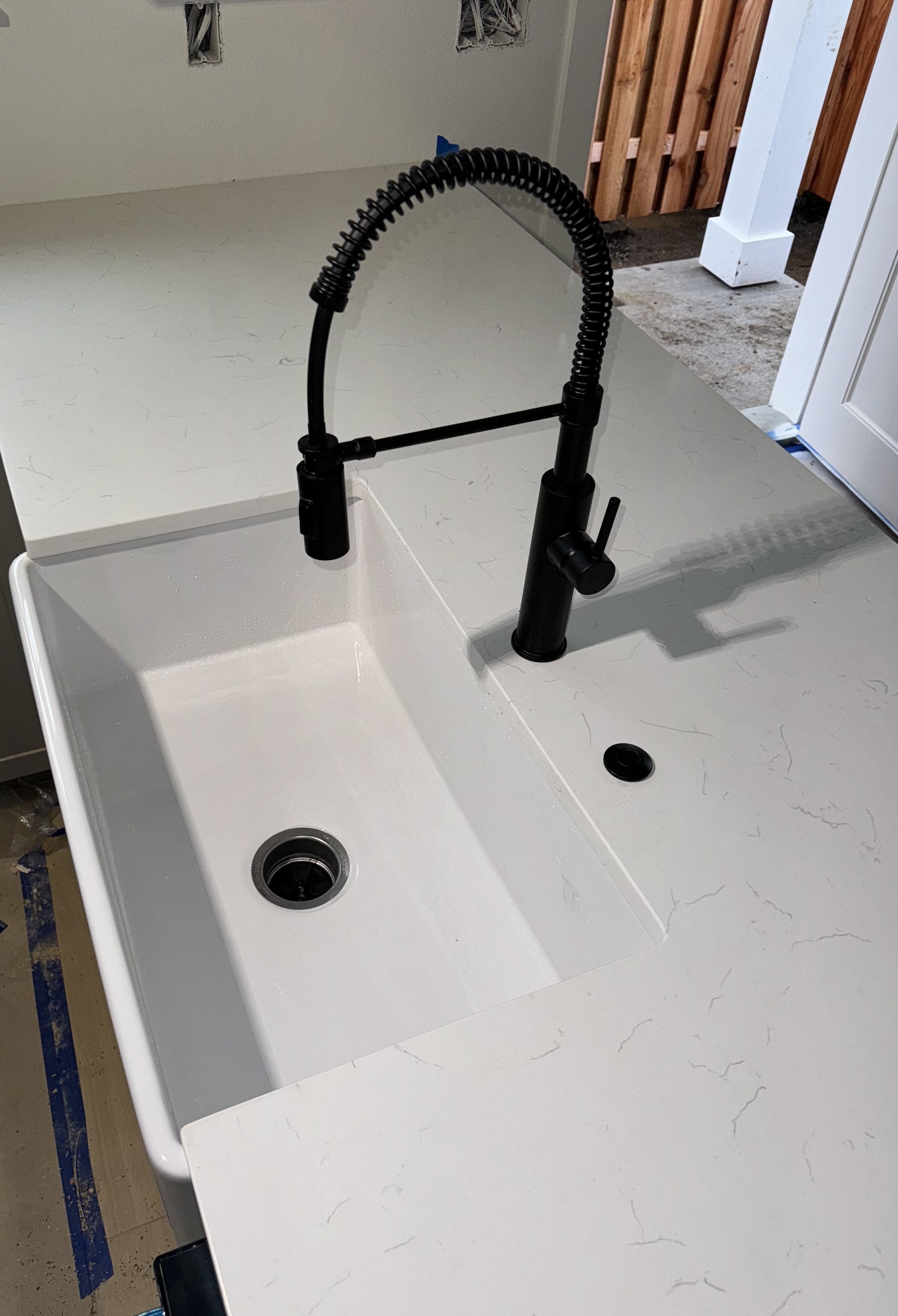
Run a fingertip around the openings. You're looking for bumps, extending grain on wood, and chips. Chips around hole edges can let water creep under an escutcheon. Little chips can be reduced with 220-grit paper twisted around a dowel. Maintain fining sand light and even. On porcelain enamel, quit at cleansing. Sanding will certainly expose steel and invite rust.
If the kitchen counter is porous stone and the new tap counts on silicone for sealing, take into consideration applying a slim grain of clear silicone as a vapor barrier around each opening, after that smoothing it to a whisper-thin movie with a gloved finger. Let it heal. This protects against wicking under the completed seal.
Confirm hole spacing, diameter, and reach
Before you ever bring the brand-new faucet right into the space, measure the deck. Opening diameter typically runs 1.125 to 1.375 inches. Some modern-day faucets need a full 1.5 inches for large supply shanks or integrated pipes. A simple step bit can open up a stainless or laminate opening easily. On rock, quit and call your maker if a hole is undersized. The wrong little bit and rate can chip an edge. It's less costly to spend for one clean enlargement than to deal with a rough crescent.
Check the distance from the faucet opening center to the sink bowl edge. A tall gooseneck looks fantastic till the spout barely clears the bowl, sprinkling on the deck. Go for a spout that projects to about the facility of the container. For normal cooking area sinks, 8 to 10 inches of reach jobs. For little washroom sinks, a short spout can still overshoot a superficial bowl if the faucet rests much back. If the geometry is wrong, now is the moment to pick a different tap, not after you have actually reduced open the box.
If you're utilizing a deck plate to cover added holes, dry fit it with the gasket and ensure it totally covers the openings. A bit of exposed opening is not something you can repair with added sealant.
Tame the tangle under the sink
A clean installation requires clear paths for hose pipes and tools. Consider the P-trap position, the waste disposal unit body, the dish washer air gap hose pipe, and any filtration system canisters. I like to loosen the trap and turn it an inch if it's obstructing gain access to, as long as I can preserve incline and seal. Note the alignment of any kind of slip joint washers so they return correctly.
Check the electrical line for the disposal, if existing. Verify it isn't stapled within the cupboard in a manner that will grab your container wrench or your lower arm. If the electrical outlet is in the back left, strategy to function from the best side to keep cables out of the way.
Find a home for the pull-down tube weight. You need a tidy decrease so the pipe retracts without massaging. If a drain pipe or shelf conflicts, you can change the path by rotating the faucet throughout set up or by sticking a small adhesive-backed guide under the sink to hold the pipe far from blockages. Absolutely nothing makes a brand-new faucet feel affordable like a hose that won't return smoothly.
Inspect and upgrade supply lines and connections
Most modern-day faucets ship with stainless knotted supply lines affixed. They're trusted and rated for usual pressures. If your tap needs separate lines, buy braided lines with a gentle move, not ones that kink when you nudge them. Match the length to prevent limited bends. I aim for a loophole with a radius a minimum of the dimension of a grapefruit. Sharp bends emphasize the liner and can hum at certain circulation rates.
Supply connections differ: compression, FIP, or push-to-connect on some valves. Evaluate the shutoff strings for dings or squashed locations. If the ferrule on a compression shutoff has deep grooves or corrosion, changing the valve beats attempting to secure a compromised seat. Swab a little plumber's oil on rubber washers. Do not utilize pipe dope or tape on compression strings. For threaded FIP links that secure on the strings, cover PTFE tape snugly in the direction of the strings, a couple of covers. Extra isn't much better. Thick wads are the opponent of correct seating.
If you're adding devices like a filtered tap or a soap dispenser, pre-plan the tee links. I maintain short shutoff adapters on hand to isolate attachments during future upkeep. It's a tiny expense that settles the very first time a cartridge falls short and you don't intend to shut the entire sink down.
Dry fit everything like you indicate it
Treat the tap like a challenge, not a shock. Area the tap on the deck without sealer and inspect clearances. Feed hoses with the holes and make sure they land where you expect. Revolve the body to locate the pleasant area where the manage removes the backsplash when fully hot. Some single-handle taps can be set to a forward-facing neutral placement so the deal with does not hit the ceramic tile at 115 levels. If you discover a clash currently, you can reorient the body or select a various deal with sweep.
For three-hole prevalent taps, outlined the takes care of and spout. Confirm the reach of the interconnecting pipes. If the shutoffs sit also far apart for the supplied lines, adjust the spacing or strategy to buy longer ports. Despise to claim it, but I've been captured by a millimeter right here. Dry suitable saved the day.
Once you're certain in positioning, mark a faint pencil line on the deck to recommendation placement. On stone, use a detachable wax pencil. Those marks make last setting up quick and true.
Choose the best seal
Sealants are not compatible. Plumbing's putty is conventional under steel escutcheons on non-porous surface areas like stainless or porcelain. It remains pliable and can be eliminated later on. It can tarnish porous stone and some composites. Use a non-staining putty if the countertop might soak up oils. Silicone develops a durable seal on rock, quartz, and glass, but it's more irreversible. If you ever expect to change the tap, a slim, also bead simply outside the openings offers a water barrier without cementing the entire base.
Many taps currently ship with molded gaskets. If you have one, trust it unless the counter is uneven. Gaskets press against a clean, level deck and need no added goop. If the surface area has pitting, a whisper of clear silicone on the bottom of the gasket aids. Apply so lightly that it doesn't press out.
Soap dispensers take advantage of a slim ring of silicone under the flange. That area sees foam and spills daily, and putty can loosen there.
Get your devices with each other so you do not leave mid-job
The fastest Faucet Installation tasks never ever stop because the appropriate tool is already on the towel. Collect what you need within reach. Then stop and include a few extras: a little mirror, thread seal tape, an additional supply line, a squat screwdriver, energy knife, rags, a cup for fasteners, zip connections for hose pipe monitoring, and a pen. An extra bucket never hurts. Under a sink, things run downhill fast.
List one: Compact prep toolkit for under-sink work
Home page- Basin wrench and flexible wrench Slip-joint pliers and channel locks Utility knife, plastic scrape, and rags Headlamp or slim work light, tiny mirror PTFE tape, silicone, plumbing's putty (non-staining), gloves
Time to devote: establish the faucet and safeguard it right
With the deck clean, completely dry, and marked, use your picked seal or set the gasket. Feed the hoses and shank through the opening. Keep the faucet straightened with your pencil mark. Under the sink, slide the gasket, friction ring, and mounting nut up the shank in the order the manufacturer specifies. Tighten by hand till snug, then use the wrench. Do not overtighten. You're pressing a gasket, not pressing bearings. I stop and check alignment as I go. Two little corrections currently stay clear of a crooked spout that will trouble you for years.
For three-hole taps, begin by freely mounting all 3 parts. Bring them progressively to snug, examining the deal with angle for balance. If the handles feel stiff after tightening, you may have compressed a gasket right into the relocating components. Withdraw a quarter turn and test.
Pull-down designs need the hose transmitted after the body is protected. Affix the spray head, feed the pipe through, and clip on the weight at the specified range from the head. The weight requires a clear upright run. Cycle the hose pipe Faucet Installation Service in West Linn a dozen times by hand to validate smooth traveling. Change the weight position if the head hangs except docking.
Connect the supply lines to the shutoff valves. Hand-tight first, then a quarter transform with a wrench. Support the shutoff body with the 2nd wrench to avoid torque on the wall surface line. If connecting to a disposal's dishwashing machine inlet or a side sprayer diverter, adhere to the given order. Some diverter caps require a gasket seated so, or they'll mist under pressure.
Prime and pressure examination like a pro
Before you let water loose, eliminate the aerator from the spout. Particles from new lines and sealant smears will certainly lodge there. Shut the tap manage. Open the chilly valve slowly, then the hot. Look for prompt beading around each connection. Run a completely dry finger around every joint. Water will stick and feel awesome prior to you see a drip.
Once the lines are pressurized, open the tap to purge. Let each side run for 30 to one minute. While it runs, check under the sink once again. You're trying to find sluggish creating decreases that show up just under circulation. If you find one, close that side and gently snug the link. A lot of weeps reply to a small change. Muscling it down is exactly how you split a ferrule or misshape a washer.
Reinstall the aerator and test once again. Relocate the deal with through the full array. Feel for smoothness and examine that hot and cold are oriented as you expect. If hot and cold are turned around, exchange the supply lines. It's quicker than describing to every houseguest that warm is best now.
Finally, run the spray head. Cycle the tube weight and guarantee the head anchors completely. If it magnetically docks, the click must be crisp. A dragging hose can be remedied with a cable television guide under the sink or by revolving the faucet body a couple of degrees so the hose pipe path avoids obstacles.
Deal with side situations prior to they handle you
Real homes are not magazines. Anticipate the outliers.
- If the counter top is puffy laminate around the opening, cuts with a sharp energy knife can soothe the ridge. Seal the subjected particle board with a shellac-based guide, allow it dry, then set up. It buys you years before swelling returns. If the sink bends when you tighten up the faucet, withdraw, add a support plate or a huge stainless washer under the deck, then tighten up uniformly. Thin stainless sinks benefit from lots spreaders to stop the tap from wobbling whenever a person utilizes the sprayer. If you uncover a drip at the spout base after mount, examine the O-ring on the cartridge or the spray head link. Many spout leaks come from twisted O-rings during assembly. A dab of silicone grease and a re-seat generally resolves it. If you find sand or grit in the water, particularly after a major shutoff event, flush supply lines into a bucket before linking to the faucet. Grit will mark cartridge seals and shorten the tap's life.
Leave it neat and documented
Clean off any squeeze-out from putty or silicone with the proper solvent. Remove painter's tape while sealant is still workable to stay clear of a rough side. Clean finger prints from the completed with a soft microfiber cloth, after that a final pass of alcohol on stainless to remove any type of oils that welcome water spots.
Take a final collection of pictures. One larger shot of the under-sink layout with connections visible. One close-up of each valve and supply. If you ever chase a mystery leak, those pictures will certainly show the in the past state. Put the faucet's manual and spare components in a zip bag taped inside the cabinet wall surface. Tag the shutoffs for hot and cold if it isn't obvious.
Then run the faucet again. Put the cupboard materials back with a little order. If a container tends to tip into the tube path, move it. A week later on, move your hand under the shutoffs. If it really feels completely dry and dusty, the prep did its job.
A note on timing and costs
For most sinks, thoughtful prep work takes 40 to 90 minutes. Eliminating a cemented fossil of an old tap can increase that. Replacing shutoffs includes one more hour if access is great. Supplies that make a difference price much less than the tap: a basin wrench, high quality sealants, brand-new angle quits if required, and excellent braided lines. If your time is tight, do the preparation the eve-- empty the closet, tidy the deck, examination the valves. The next day, the faucet enters without rush.
When to call a pro
You can handle most domestic faucet swaps with the right prep. Call for help if the shutoff valves rotate without quiting water, if you see corrosion around a copper joint, if the kitchen counter needs stone exploration, or if the faucet requires substantial adjustments to fulfill code in your location. A qualified pro brings experience and obligation coverage. They additionally bring techniques like heat coverings for soft solder joints and extraction outlets for stubborn nuts. Nothing wrong with contracting out the hour that stops a flood.
The peaceful contentment of a faucet that simply works
The ideal installs are the ones you fail to remember. The take care of moves like silk, the spray docks with a click, and the closet flooring stays bone dry. That result isn't good luck. It's clean holes, the right seal, supported shutoffs, and tidy lines free to move. Put your energy right into the preparation, and the Faucet Installation ends up being a calm series, not a fumbling match. That's how pros make it look simple-- because by the time the tap comes out of the box, the work is virtually done.
Principled Plumbing LLC
Oregon City, Oregon
(503) 919-7243
https://www.principledplumbing.com/
Review us on Google